SMILE Evaluations

Impact & Outcomes

The Purpose of Evaluation

Evaluation plays a vital role in continuously improving SMILE’s teacher professional development activities and the effectiveness of SMILE clubs in supporting student learning and academic success. Club lessons are designed in collaboration with teachers in partner school districts, and these partnerships are reviewed and renewed annually to ensure alignment with local educational needs.

Since its founding, the SMILE program has served more than 8,000 students and 400 teachers. Data is collected through student applications and event evaluations completed by students, teachers, and parents. Feedback gathered at the conclusion of each SMILE event directly informs the planning and enhancement of future programming.

Image
A group of people sit around a table engaged in a board game activity, surrounded by various game pieces. Others are discussing and observing in the background.

Measuring Outcomes

Key Indicators of Program Success

To measure the success and long-term impact of our program, we focus on the following primary indicators:

  • Sustained Participation – The length of time students and teachers remain actively engaged in SMILE programming
  • High School Graduation Rates – Tracking student completion of secondary education
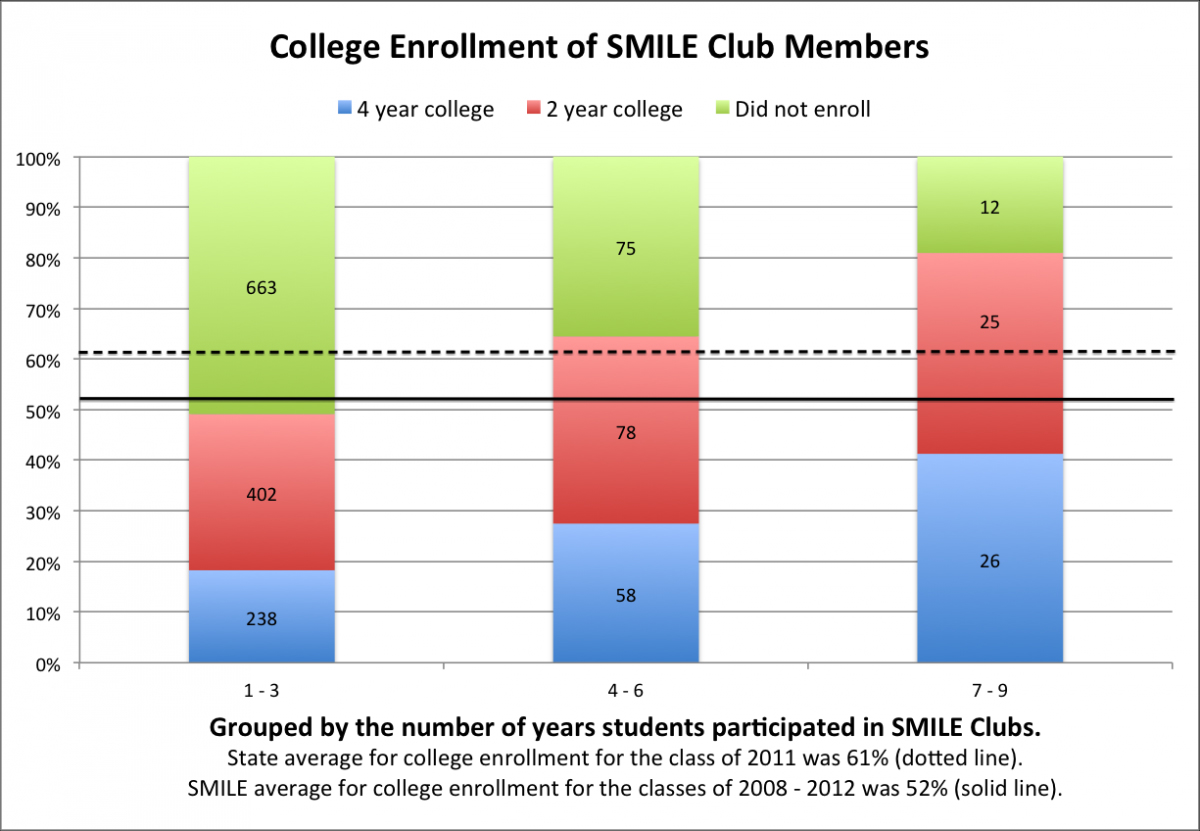
  • College Enrollment – Monitoring the number of SMILE participants who pursue postsecondary education
Image
Bar chart showing college enrollment of SMILE Club members. Grouped by years in the club: 1-3, 4-6, 7-9. Green bars: 4-year college, red bars: 2-year college, blue bars: not enrolled. Dotted line: 61%.